Ubben Posse Fellow Interviews: Neil Blumenthal
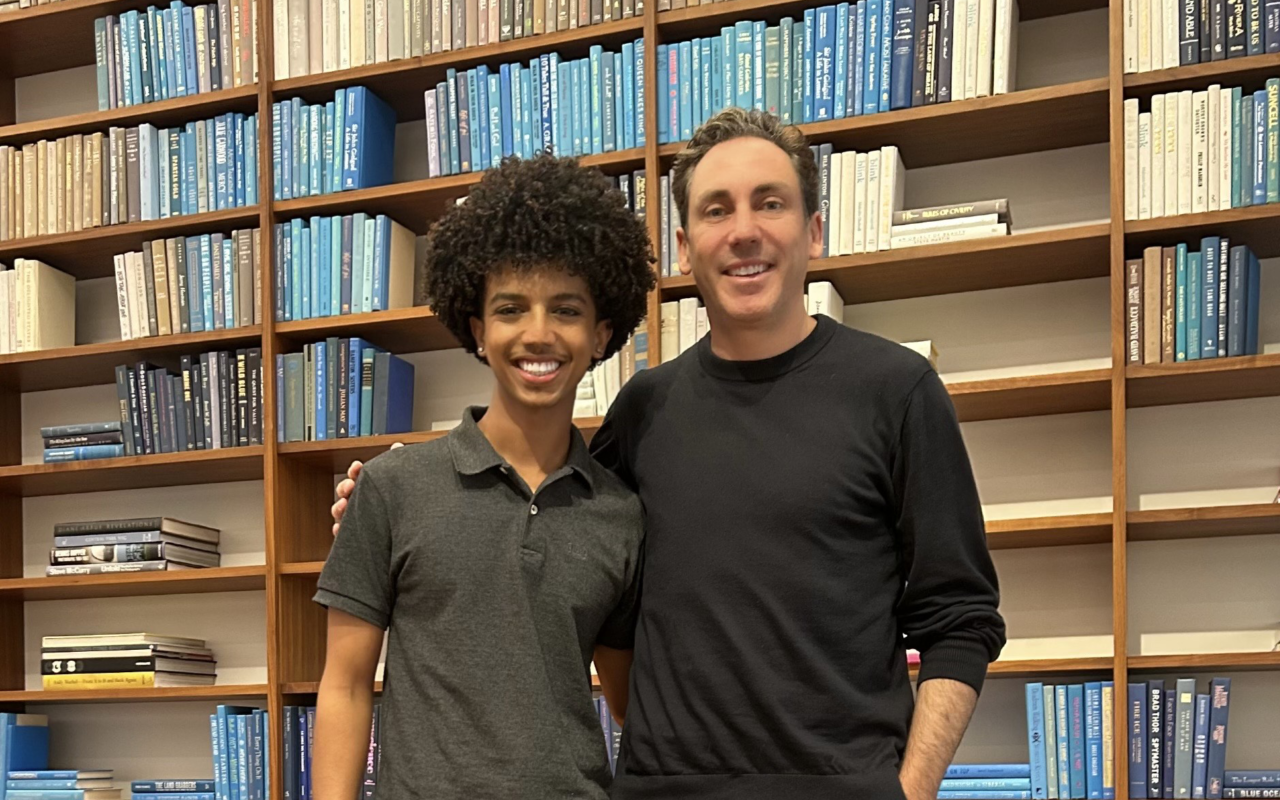
The Jeff Ubben Posse Fellows Program awards five exceptional Posse Scholars $10,000 each and the chance to spend 4-6 weeks during the summer shadowing and learning from a major industry leader. The interview below with Neil Blumenthal, Co-CEO of the Warby Parker, was conducted by Posse Scholar Abnazer Abadi, now in his junior year at St. Olaf College, who worked with Neil Blumenthal as a 2025 Jeff Ubben Posse Fellow. The conversation has been edited and condensed.
ABNAZER: Take us back to your upbringing. What made you the person that is sitting in front of me today?
NEIL BLUMENTHAL: I’m an only child, born and raised right here in New York City. My parents shaped me more than anyone else. My mom was a nurse for over 40 years—one of the most selfless people I’ve ever known. I watched her care for patients and even our family friends like they were her own. Once, during my little league game, there was a shooting, and someone was hurt. While everyone else ducked, she ran toward the person to help. That kind of courage stays with you. As for my dad, he was an international tax consultant and deeply committed to education. He walked me to school in the morning and then went to NYU for his MBA. He taught me how to think critically and have integrity. For example, he never told me who he voted for, to encourage me to form my own opinion.Shape
You studied international affairs, but today you’re running a major eyewear brand. How did that shift happen?
In high school, I spent a summer in Israel studying history and conflict in the Middle East. It was powerful: I saw the complexity of geopolitics firsthand. That led me to double major in History and International Relations at Tufts. I thought I’d work in foreign policy, maybe for the State Department.
After graduating, I did coursework in negotiation and mediation at The Hague and worked at a think tank that proposed solutions to global conflicts like in Colombia or the former Yugoslavia. But I noticed something: all the leaders at the top had political experience. I realized if I stayed, I’d likely never become the decision-maker. That reflection made me rethink my path.
Prior to launching Warby Parker in 2010, You served as director of VisionSpring. How did you transition from college to VisionSpring?
A family friend introduced me to her optometrist, who ran that nonprofit, VisionSpring. It was this fascinating hybrid using microfinance to train low-income women to sell affordable glasses in their communities. I had never been passionate about glasses specifically, but I was passionate about solving real-world problems.
I moved to El Salvador for six months to help pilot the program. Later, I helped scale it to Guatemala, India, Bangladesh, Ghana, and more. We sourced glasses from manufacturers in China, figured out logistics, and trained women to sell in their neighborhoods all while people lived on less than $4 a day. It wasn’t just eye care — it was economic empowerment.
What pushed you to go to business school?
I loved the work at VisionSpring, but after five years, the learning curve was flattening. I also started to see how nonprofits were undervalued by the business world even though I was managing global supply chains and strategy. I wanted to broaden my opportunities and earn the credibility that comes with an MBA from a place like Wharton. It was a strategic step to open more doors, gain respect across sectors, and continue building things that matter.
Warby Parker was born while you were still in business school. How did you stay motivated to build a company while being a full-time student?
Honestly, I was just excited. I couldn’t stop thinking about the idea. Glasses were too expensive, and my background in the nonprofit space made me realize the opportunity. It struck me that we could sell them online, make them affordable, and create a brand people love. Business school made the process easier. Every course in marketing, supply chain and operations was directly applicable. I used what I learned in real time. I also leveraged my professors and classmates for advice. Many of them had worked at places like Amazon or in digital marketing, so I had access to deep knowledge that helped shape our early strategies.
Did anyone ever doubt you or make you second-guess the idea?
I believed in the idea, but I wasn’t naïve, I had a backup plan. I got a job offer from McKinsey in case Warby Parker didn’t work out. That gave me peace of mind.
When I told people I wanted to sell glasses online, many were skeptical. Some didn’t say it directly, but I could sense the hesitation. So, I asked, “What’s holding you back?” They’d say, “Well, I want to try them on first.”
That was valid and that insight led to one of our biggest innovations: the Home Try-On Program. The doubts didn’t discourage me, they made the idea stronger.
Let’s talk about leadership. If you had to describe your leadership style in three words, what would they be?
Proactive, Caring, and Communicative.
Proactive because leaders are responsible for driving action, they must have vision and the initiative to act.
Caring because people follow leaders they trust. Understanding others what they want, need, and value helps you support them effectively.
Communicative because great leaders share their vision clearly and give regular, honest feedback. Communication builds alignment and momentum.
Dave (Dave Gilboa, co-founder and co-CEO of Warby Parker) said the most important thing he’s learned from you is optimism. How do you maintain that outlook?
I don’t think about it consciously, but I’ve always believed in the power of improvement. I think things can get better. Even with all the challenges in the world, I believe in agency, in our ability to shape outcomes individually and collectively.
I’m realistic about problems, but I still choose to be optimistic. I want to live in a world where change is possible.
Warby Parker’s mission centers on “Vision for All”—both literally and figuratively. What’s one piece of advice you’d give to someone hoping to cultivate a clear vision and create lasting impact?
Be incredibly practical. For example, if people don’t have glasses, then our job is to get them glasses.
Instead of reinventing the wheel, we asked: who’s already doing good work? My old nonprofit VisionSpring. So, we partnered with them and funded their expansion.
We always look for the path of least resistance like water finding the easiest way down. If the goal is to get glasses to kids in New York City, where do they reliably go? School. So, we worked with the Department of Education to serve students directly there. All to say, “It’s about breaking down a big vision into small, doable steps and then building from there.”
Is there anything you wish I had asked you?
People often ask about work-life balance. Personally, I believe in work-life integration. I involve my wife in work conversations. My kids know what I do.
I don’t really separate the two because my work is tied to my purpose.