Ubben Posse Fellow Interviews: Luis Von Ahn
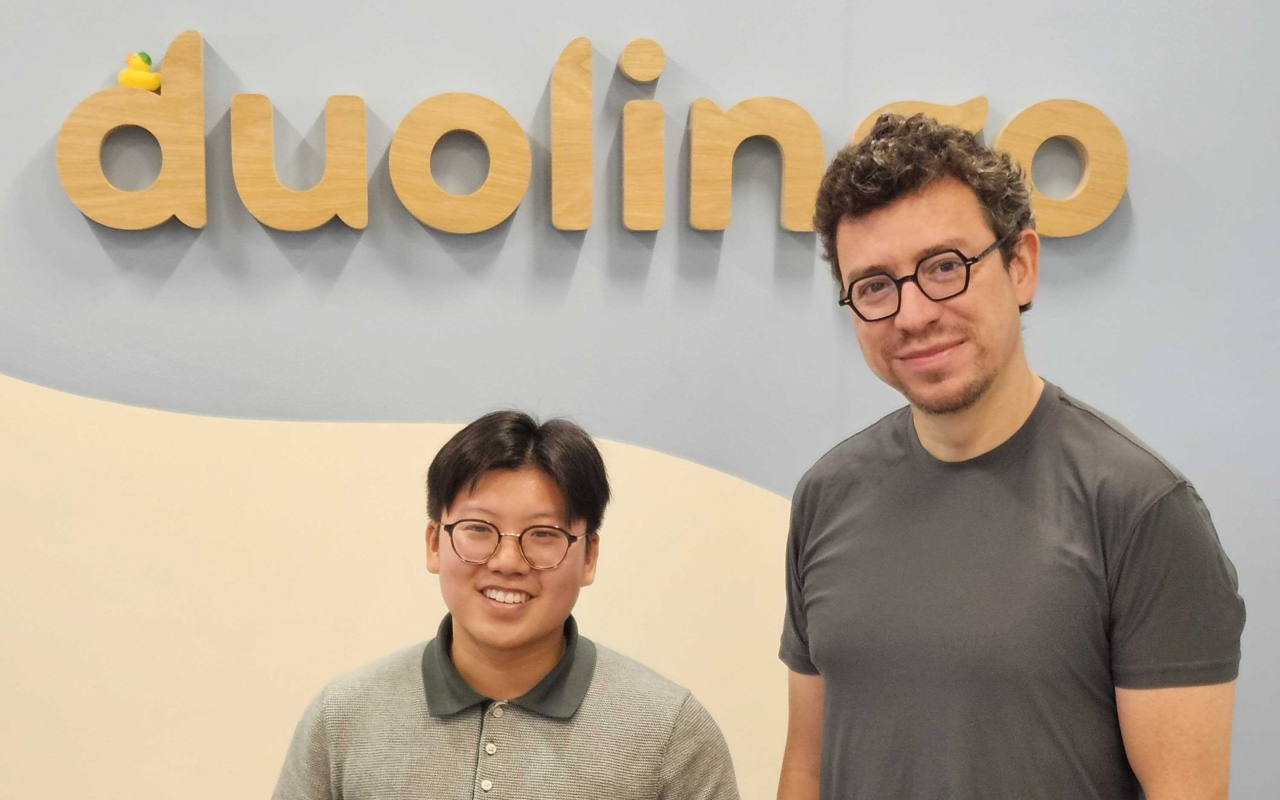
The Jeff Ubben Posse Fellows Program awards five exceptional Posse Scholars $10,000 each and the chance to spend 4-6 weeks during the summer shadowing and learning from a major industry leader. The interview below with Luis Von Ahn, CEO of Duolingo, was conducted by Posse Scholar Rae Traver-Fallick, a current junior at Smith College, who worked with Luis Von Ahn as a 2025 Jeff Ubben Posse Fellow. The conversation has been edited and condensed.
RAE: You’ve said in other interviews that you’re not a people person, but from what you’ve told me, you had a social childhood. So where does that perception come from?
LUIS VON AHN: When I say that I’m not a people person, I mean there are a couple of things that I’m not naturally good at and have to work on. For one, I get anxious talking to strangers - I’ll happily chat with anyone at Duolingo, because they aren’t strangers. But put me in front of a total stranger, and sometimes I freeze up. My wife teases me about this.
The other part is that I’m not naturally good at navigating conflict. If I sense tension, I’ll try to smooth it over right away. While some leaders are gifted at navigating conflict, it’s been a skill I’ve had to build – like learning a language.
Where does that conflict avoidance come from?
Some of it is cultural. Where I grew up in Guatemala, the way to say "no" is to say "yes", unemphatically. In my experience, it was unheard of to tell somebody they had done a bad job at something. That’s just not a thing you can do. And here you sometimes have to do that so I had to learn.
When I see you in meetings, you’re often very firm, which can lead to conflict. So how did you develop those skills?
Honestly, it took years - and it still doesn’t come naturally.
When we first started Duolingo and I had to fire someone, I was so gentle that they didn’t realize it had happened. This happened twice with the same person, where they didn’t even know they had been let go, and they came back to work. The third time, I was like, "Listen, I don’t know how to say this, but you are fired. You cannot come back."
Learning to be direct without being unkind takes a lot of practice. Now, much of it is intuition from years of experience.
On a similar note, I want to dive into your meetings where you’re either an observer, a moderator, or a main contributor. What pushes you into a more active role?
Usually, this happens when I think we need a course correction. Most of the time, I bite my tongue to empower my teams. If something still feels wrong after a week or two, that’s when I know it’s worth a deeper conversation. But I’ve also been wrong before, so holding back sometimes saves me from stepping in unnecessarily.
Do you ever regret what you say when you take on a more active role in the conversation? Can you give me an example?
Occasionally. Of course, that happens. Sometimes it’s because I’ve changed my mind; other times it’s because I wasn’t as gentle as I should have been. When that happens, I’ll reach out to apologize. There’s a way to be fully firm and not upset anybody. I am working to be better about this. I don’t think being CEO means you can’t say you’re sorry.
When you think about the great leaders that report to you, what are the qualities that you feel like make them great? You just mentioned the ability to be firm as one of them.
Two things. First, they don’t constantly ask me to solve problems for them. They identify solutions instead of problems. Second, when we agree on something that needs to get done, I never have to follow up. I can trust they’ll deliver without reminders. That reliability is incredibly valuable. Those two characteristics, I think, are the most important things.