Ubben Posse Fellow Interviews: Michael Arougheti
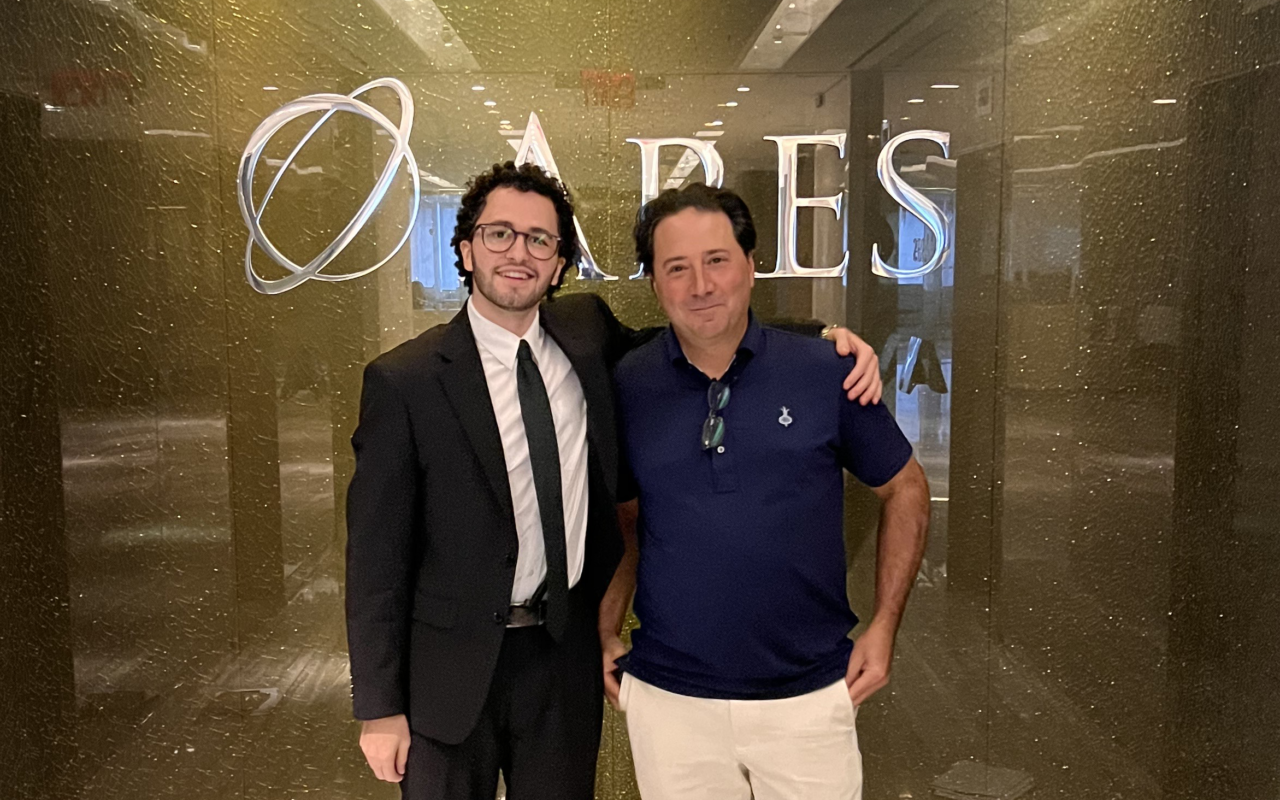
The Jeff Ubben Posse Fellows Program awards five exceptional Posse Scholars $10,000 each and the chance to spend 4-6 weeks during the summer shadowing and learning from a major industry leader. The interview below with Michael Arougheti, CEO of Ares Management, was conducted by Posse Scholar Kamel Barghouti, now in his junior year at The University of Virginia, who worked with Michael Arougheti as a 2025 Jeff Ubben Posse Fellow. The conversation has been edited and condensed.
KAMEL: I’d love to rewind the clock and take you back to your childhood. What were you like as a kid?
MICHAEL AROUGHETI: I grew up in a town called New City, about an hour north of New York. Both my parents were schoolteachers. My mom taught French and Spanish at a local high school, and my dad was an assistant principal in a NYC high school, and taught classes at Baruch and NYU. I have an older brother. We were a very close-knit family that placed a high value on family, education, hard work, humility and service. I worked hard, but I also played hard, both in good ways and not-so-good ways. I think I was more hard-charging than I realized at the time. I did well in school, played a lot of sports, and had great friendships.
Would you say you’re more like your mother or your father?
I’m a pretty even mix. My mom is emotionally connected to the world, big heart, big feeler. My dad is as well, but a more stoic, extremely hardworking, high-integrity and values-driven. He never really chased material things, and that shaped a lot of how I think. I’d like to think I took the best from both of them, though personality-wise, I’m definitely my own animal.
I’d love it if you could take me to the origin story of joining Ares with Kipp deVeer, Michael (Smitty) Smith and Mitch Goldstein in 2004 and 2005 to lead the private credit and BDC initiatives.
Mitch and I were at Indosuez Capital in the late ’90s, and Kipp and Smitty joined us as summer associates. By 2001, we moved 40 people to RBC to build out a private markets business, but after two years we hit capacity. We proposed raising third-party money, which got complicated at a bank. So, in 2003, we spun out with 12 people and an agreement to manage the RBC portfolio externally.
Around that time, Bennett Rosenthal from Ares reached out. Apollo had just taken a BDC public, sparking a wave of interest. Roughly 25 other asset managers filed to do the same, but none were able to get a deal done except Ares. Ares had recently closed its first private equity fund, and they were looking to enter the BDC space. We had the portfolio, the team, and the track record to make it happen. So we joined forces. That marked the beginning of Ares’ private credit platform. We launched the BDC in October 2004 with $225 million in capital. Mitch rejoined soon after, and that foundation became what you see today.
Looking back, what was the most important decision you made for Ares’ long-term success?
Two things. First, partnering with people I trusted, those who shared the same values and long-term vision. Second, we split the initial economics equally. That decision fostered a culture of shared success and trust that still defines the firm today. It’s rare in our industry, but it shaped everything that came after.
How do you create conviction and lead in times of difficulty, especially when others can’t yet see your vision?
In crisis, the most important thing I can do is be transparent, honest, and, when appropriate, vulnerable. Some leaders think they need to appear bulletproof, but I’ve found that being real builds more trust. In times like COVID or the global financial crisis, I made sure to express what I was feeling while also conveying conviction in our team and direction.
When people don’t yet see what I see, I spend time showing my thought process and being transparent about how I got to my conclusion. Most of the time, I build consensus and bring people along. But there are moments when urgency and conviction outweigh consensus, and I have to make the call. That’s part of leadership, too.
You’ve built a reputation for next-level relationship building, flying town to town to meet clients in local communities. What’s your philosophy there?
It starts with authenticity and humility. Business relationships last when people show up as their real selves. Then it’s about demonstrating commitment. In a transactional business like ours, it’s easy to lose sight of the long term. But the most enduring relationships are the ones where both sides have made deposits over time. You don’t just say it, you show it.
What’s your “north star” in life?
That’s a beautiful and hard question. I don’t know if I’ve ever reduced it to a single phrase, but if I had to try, I’d say my “north star” is: be useful, be kind, and do the right thing. That’s a combination of what I learned from my parents and what I’ve come to believe through experience.
I try to approach life with integrity and love at the center, whether that’s how I lead at work, how I show up for my family or how I support my community. I want to be the best version of myself, and I know that version comes through service, growth and compassion, not just ambition or success.
There’s a phrase I use a lot, “do the right thing, even when it’s not the easy thing.” That’s a kind of mantra for me. In leadership, in parenting, in friendship, that’s where character shows up. It’s not about perfection. It’s about having a compass and checking in with it often.
What’s your favorite thing about your job?
Without question, it’s the people. The most meaningful part of my job is mentoring others and seeing people grow over time. Some of the partners running businesses here today were analysts or associates when they first joined. I’ve worked alongside them since they were fresh out of school. Watching them evolve into trusted leaders is deeply rewarding. I feel grateful to have been part of their personal and professional journeys.
But that same emotional investment can be the hardest part, too. Leadership is not just strategy and decisions, it’s carrying people’s worries, managing their growth, navigating the inevitable friction. It can be draining. But that’s the cost of real connection. If you want people to bring their whole selves to work, you have to be willing to meet them there, and that means showing up, even when it’s messy or hard.
So yes, relationships are both my favorite and most challenging part of the job, but I wouldn’t trade them for anything. That human dimension is what makes the whole journey worthwhile.