Ubben Posse Fellow Interviews: Frankie Miranda
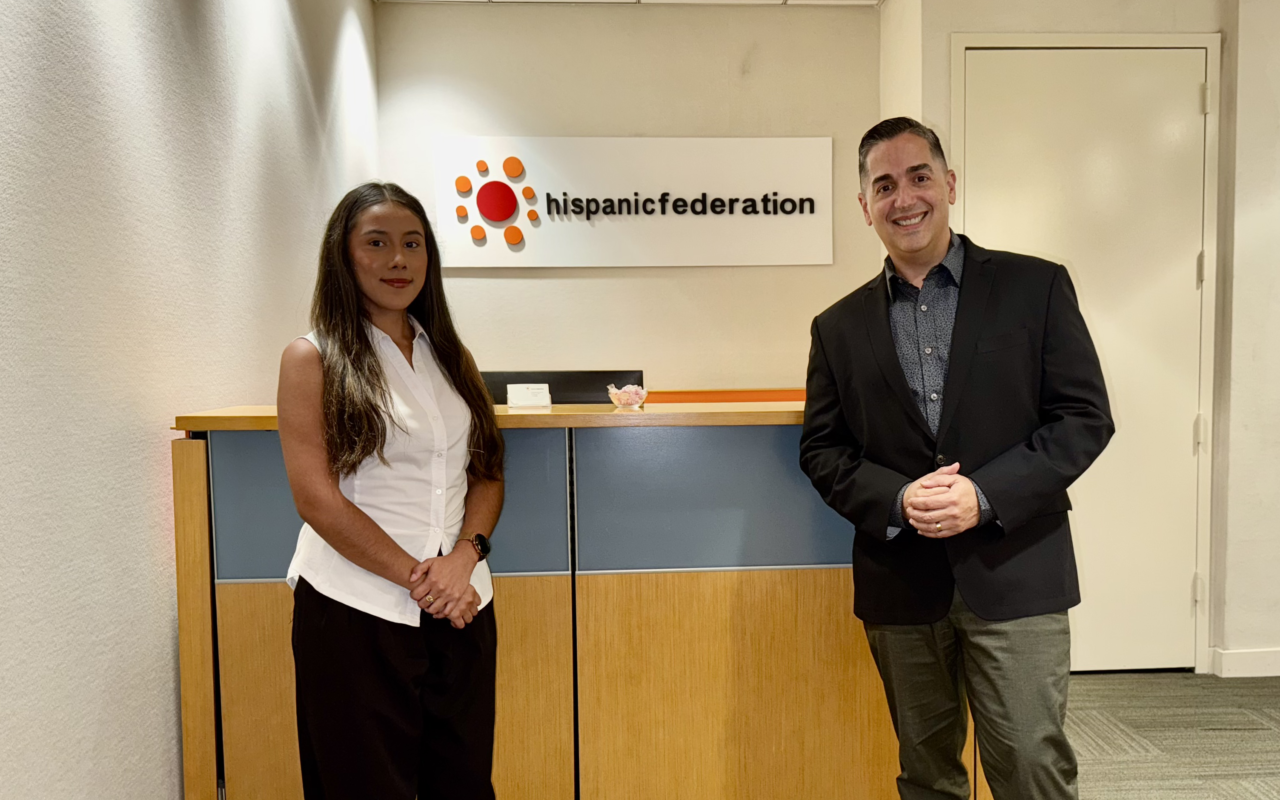
The Jeff Ubben Posse Fellows Program awards five exceptional Posse Scholars $10,000 each and the chance to spend 4-6 weeks during the summer shadowing and learning from a major industry leader. The interview below with Frankie Miranda, President and CEO of the Hispanic Federation, was conducted by Posse Scholar Stephanie Granobles, currently in her junior year at Pomona College, who worked with Frankie Miranda as a 2025 Jeff Ubben Posse Fellow. The conversation has been edited and condensed.
STEPHANIE: I want to start off by asking about your early life. Is there a lesson or belief from your childhood that you’ve had to unlearn to get to where and who you are today?
FRANKIE MIRANDA: Growing up gay in a small town in Puerto Rico, a lot of people bet that I was not going to amount to anything if I was my true self. Even today, when I am in a room full of people, after so many years working in the nonprofit sector, there is a moment that I will hear those voices in my head: I was not supposed to be here, that English is not my first language. I have to, in the middle of it, remind my brain, that’s not true.
It’s a journey of 54 years, so to this day, I realize how damaging it can be to be exposed to that type of language. That is one of the reasons why part of the work that we do is to try to change narratives. From the beginning of childhood to adulthood, people will struggle if they don’t see others with faith in them—those who will allow us to rewrite toxic scripts in our heads.
Thank you for being vulnerable. It’s inspiring to see how you’ve not only unlearned at an internal level, but it also informs your work. Talking about earlier life, you’ve spoken of how your master’s in performance studies at NYU brought you to New York, where you entered the nonprofit world. How do you bring insights from the artistic world into your work today?
That’s a great question, because a lot of people feel that our path should be planned and straightforward. I found myself entering the nonprofit world by accident. I finished my master’s degree at NYU very proud of it. While I was offered to continue on the PhD track, I couldn’t afford it. Because of my affinity with art groups, working in the past in Puerto Rico and here in New York, I found myself exposed to nonprofit groups.
In 1998, I was offered the opportunity to start at Hispanic Federation as the Program Coordinator of a small program in a satellite office in the Bronx. I learned very quickly that my background in theater translated well with the challenges in front of me as an organizer and program manager. Finding unique solutions for communities is all about how, in theater, we do table work, we research, we rehearse, and we imagine every single detail from the perspective of the participant. The awareness of how you project, communicate, tell a story, and being able to empathize and connect with people–all of that I have been able to draw on from my artistic background and translate into something essential for this organization to be successful.
Thank you for those insights. To speak to that arts approach on a wider lens, how do you believe that the arts can also be a means of advancing social change for Latine communities?
I mean, art is expression, it is mental health, it is about not being able to silence an entire community. It is support. It is resistance. It is not an accident that in times of crisis, the first thing to be defunded and the last thing to be re-incorporated is the arts.
Sometimes you’re surrounded by artistic acts of resistance, without even being conscious about it. Art is going to be appreciated and read through the lenses of the communities that created it, and will always be effective at messaging something, in code or in clear words, of the real sentiment of that community.
That was beautiful. Thank you. Turning to your later work with Hispanic Federation, Plato once said, “He who does not desire power is fit to hold it.” Similarly, you have described how when the board first approached you about becoming CEO, you declined. Can you speak to what prompted the shift in decision and your general leadership philosophy?
At first, I said no three times. The first time, I didn’t believe that I was the right person. The second time, I didn’t know that I wanted it. The third time, it was more about, I am so good at what I’m doing right now, why shift? In my previous role, I was able to manage the response to Hurricane Maria in Puerto Rico, and the monumental task of providing immediate response to communities around the island. I felt a sense of pride and agency having so much knowledge on the ground–how we were providing support, pounds of food, number of water bottles distributed. Abandoning those types of tasks, which were very concrete, and moving into a leadership position, it sounded to me very abstract. There were people that came to me and said, we are entering an important year, and we cannot afford to have a long search process when we are 100% sure that we have the right person. When I accepted the position, immediately my will and my conviction was tested. I was confirmed as president in late December of 2019. Our first meeting with the leadership team coincided with the earthquake in Puerto Rico. A few weeks later, New York City became the epicenter of the COVID 19 pandemic. Reflecting on that, I think that the board was right in their decision because some of my leadership formation was on rapid response and crisis management.
I consider myself a leader in times of crisis. I have been prepared for these challenges knowingly or not. Also, I need to recognize that I work for an organization of 35 years of legacy. Many leaders before me built the foundation of an incredible team, organization, and mission. We are an organization that runs into the building because that is our DNA, and being here for over 20 years, unavoidably, it’s also part of my DNA. So, our trajectories don’t need to be a straight line: sometimes there is a detour, and sometimes it is about the people around you who are going to be those whisperers and say, “You are right for this challenge. You should take it on.”
In those unique moments, Hispanic Federation and many nonprofits were at the forefront of delivering vital services. To build on this theme, we know that nonprofits are vital to many communities in the U.S., but some have criticized policymakers for delegating many public services and resources to nonprofits instead of having the government provide them directly. They argue that direct, visible provision could increase public engagement in government. As someone who leads a nonprofit, I’m curious about your thoughts on how nonprofits and government should work together in delivering services. Is there a better model?
I think that there is no successful society if all sectors are not working together. As an organization, our role is to bring in the government, the private, the philanthropic, and the nonprofit sector. It is impossible for the government to really understand the nuances, the cultural and linguistic competency, that is needed to effectively serve certain communities. There’s always going to be certain levels of trust and distrust in government. That is the moment in which nonprofit systems become essential—they are the bridge. They can reach communities that the government or private sector cannot.
I think we need to have a better relationship between lawmakers and nonprofit organizations, understanding that policy has to meet the needs of certain communities and that certain policies, if not created through a participatory process, always leave people behind. The nonprofit sector really understands the needs in communities and should be part of, from the very beginning, the participatory process of creating new laws, agencies, or services. We would love to live in a world where nonprofit organizations are not needed, but the fact is that the private sector and government cannot fill all of those needs.
Outside of HF, you serve on advisory boards and have participated in various multicultural roundtables. In Connecting that to Latine Justice, what role do cross-racial coalitions play in getting us there?
Systems sometimes are designed, purposely or not, to force us to compete across different groups for limited resources. It is about the reality of the numbers. We know that less than two percent of institutional funding, talking about major foundations, goes to Latinx organizations. Why do we need to compete with the limited resources, when what we need to do is expand them all?
And you can only do that when you’re working in spaces that are multiethnic, multiracial. It is very important, sometimes challenging because you have to understand the needs of other communities. How can I be effective in advocating for Latinos in Los Angeles that speak zapoteco if I am not understanding the needs of the Native Americans and Indigenous populations in the United States? And it is our responsibility to make bridges between Afro Latinos and African Americans. What we need to do is find or create spaces where we can really understand our unique circumstances and histories and be able to find commonalities. Otherwise, everybody’s going to be the ‘other,’ when the reality is that we should be together in these struggles and in these aspirations for equity and justice.