Posse Ubben Fellow Interviews: Robert Kyncl
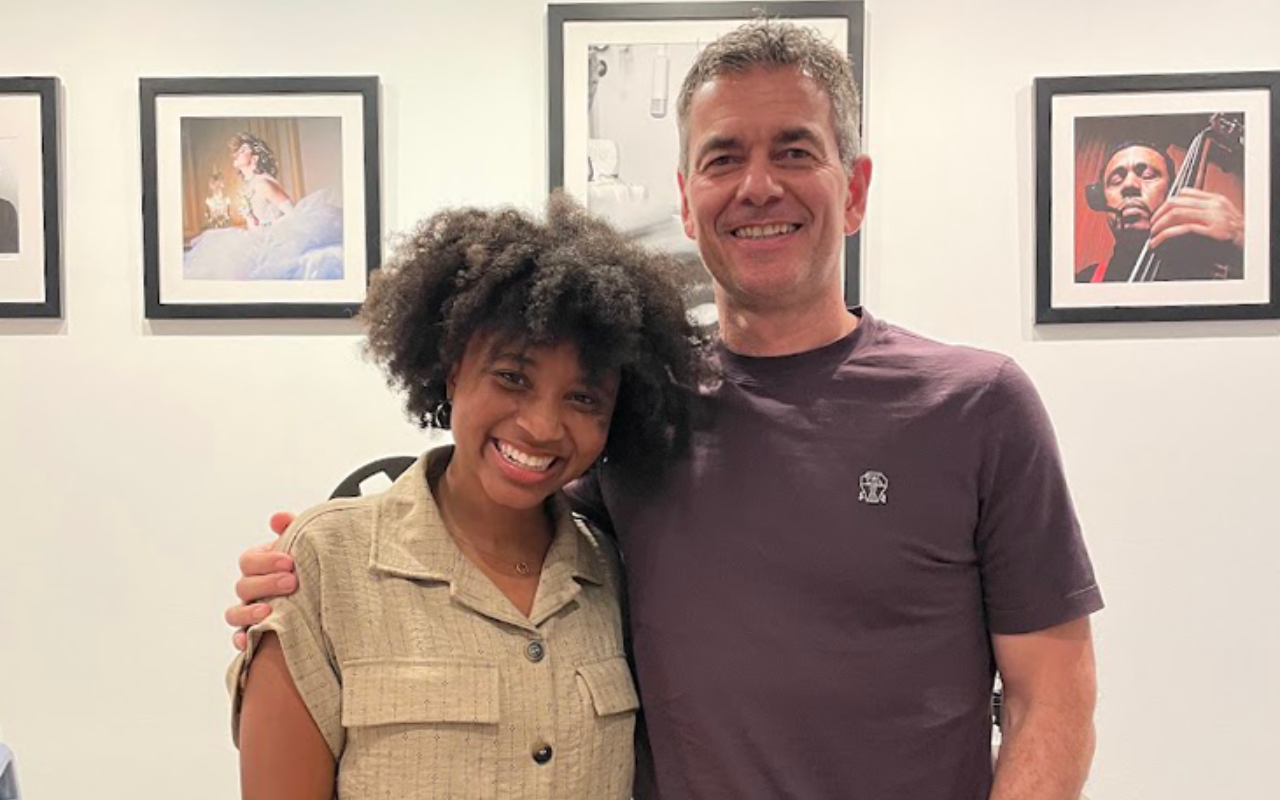
The Jeff Ubben Posse Fellows Program awards five exceptional Posse Scholars $10,000 each and the chance to spend 4-6 weeks during the summer shadowing and learning from a major industry leader. The interview below with Robert Kyncl, CEO of Warner Music Group, was conducted by Posse Scholar Savannah Dever, a current junior at Bryn Mawr College, who worked with Robert Kyncl as a 2026 Jeff Ubben Posse Fellow. The conversation has been edited and condensed.
SAVANNAH: Looking at your trajectory, it’s inspiring to see all the diverse environments you’ve navigated. From your time launching international markets at HBO, to helping transition Netflix into streaming when it only had 5,000 subscribers, to helping scale YouTube from its earliest days into the global giant it is today; you have essentially had a front-row seat to the modern history of entertainment. As someone who aspires to lead in the future and navigate complex spaces, I’m curious– amidst all these different roles and organizational cultures, what have been your top non-negotiables as a leader that have remained constant for you over the years?
ROBERT KYNCL: That’s a very good question. If you look at all these companies and what they were working on, they were basically pioneering something new. So, one of my non-negotiables was hiring people who knew how to manage the unknown. The other non-negotiable is having stunning colleagues. It’s important to have talented people that you really respect, because great talent puts pressure on the company’s areas of underperformance, while simultaneously pushing the strong players to get even stronger.
Speaking of people navigating the unknown, you mentioned in an all-hands meeting the importance of being lifelong learners to advise employees that curiosity is the key driver of success amid uncertainty. Recognizing that knowledge is power, what is something you are teaching yourself or learning to this day?
Lately I’m learning about AI and using it to build different things. I’ve never actually coded anything myself, but now I can. It’s a big learning experience, but it’s fun. It’s a little bit like Roblox for adults. I do that a lot on the weekends or evenings.
What is something that brings you joy working at Warner?
One thing for me is visiting our teams around the world. If I go to Hong Kong, Tokyo, Beijing, or Madrid, for example, it’s really nice to see our people around the world and how they’re approaching things. It’s great to have this global connectivity. Another favorite thing is meeting with artists. I go just to observe, even without an agenda, to understand what their problems are and how they’re thinking about their life and art.
I know meeting artists involves a lot of the Artists and Repertoire Division (A&R). So, are you able to meet artists frequently, or is that more what A&R does?
It’s an A & R thing; they’re doing that day-to-day. For me, it’s very infrequent, but when it happens, it’s great. Artists are entrepreneurs effectively, right? They’re the CEO of their own business, so it’s great to meet, think, and talk about it.
As you mentor the next generation coming up under you, what is the one character trait that cannot be taught at a job but is absolutely required to survive at the top of the business?
I’d say it’s nonlinear thinking. I think about things in a little bit of a disorganized and disaggregated way. So instead of going from A to Z, one way, I just kind of think about different pieces and eventually I connect them. Nonlinear thinking is an important thing because it allows you to imagine what else could be versus what is. Normally, we get stuck managing the business in an incremental way, but we also must think about how things could be, what other markets we should enter, and what the future threats are.
So, was that something that you developed over time?
I think it happens out of curiosity. If I only read music publications, then I would only be focused on the music lane. If I read only business publications, I would be only focused on business. You must have a broad spectrum of things that you’re exposed to, which allows nonlinear thinking. It’s the same thing with artists– they completely have nonlinear thinking. The more life experiences artists have, the broader and richer their life is, and the more they can put on paper or screens in different ways. In business, the linear part is still needed, because we also must deliver steady results. But I think having that nonlinear part of you is important because it allows you to then take things in other directions over time.
As you explain nonlinearity, I think that is something that resonated with my reason for studying what I study. Every time I tell people that I study data science and sociology in college, they ask, “so what are you going to do with that?” But my goal is to tap into both sides of the spectrum. Not only do I know how to code, but I also have the critical thinking skills to understand the societal impact and real-world capabilities of that code. So, I completely agree.
When you look at the next generation of executives behind you, what is the mindset that they possess that either inspires you or makes you nervous about the future?
In general, I’m not worried. I think the right people rise to the occasion, and it’s no different for them than it was for me. There’s just more to process today. The world got more complicated with each decade. So, I believe the management of the unknown is actually more and more important because there’s just more unknown.
In what ways?
There’s a lot of noise in the market, both politically and economically. You don’t really know what’s going to happen. There are lots of signals coming at you all the time, so it becomes very disorienting, and you must function and make decisions in the middle of that. Imagine if you’re at a busy intersection in Tokyo or Times Square with lots of lights and cars and people, like in Shibuya, and you must decide amid all these signals coming at you. That’s kind of what’s happening in today’s world. I believe the leaders who are rising are the ones who can process all of that, stay calm, and make the right call.
And what do you think helped you make the right call?
One piece is the nonlinear thinking capability. It helps you zoom out and look at things a little bit from a distance and observe them, rather than fully experiencing them. It also gives you more inner peace to make decisions.
Yeah, taking a step back definitely helps. I think the more that I’m learning about you, the more overlap that I’m seeing. I’m curious about life advice. What is something that you would have done differently in your 20s, or a mistake that you made that you learned from, and what was it?
A big piece of advice I give you in your 20s is to associate yourself with the right people. Meaning, if you end up in a great company with amazing managers and leaders, that’s worth more than being somewhere else where you may make more money, but you’re not surrounded by high-quality people. When you’re with high-quality people, it’s going to make a really big impact on your life. It pulls you up, and it will pay dividends down the line.