Ubben Posse Fellow Interviews: Bill Anderson
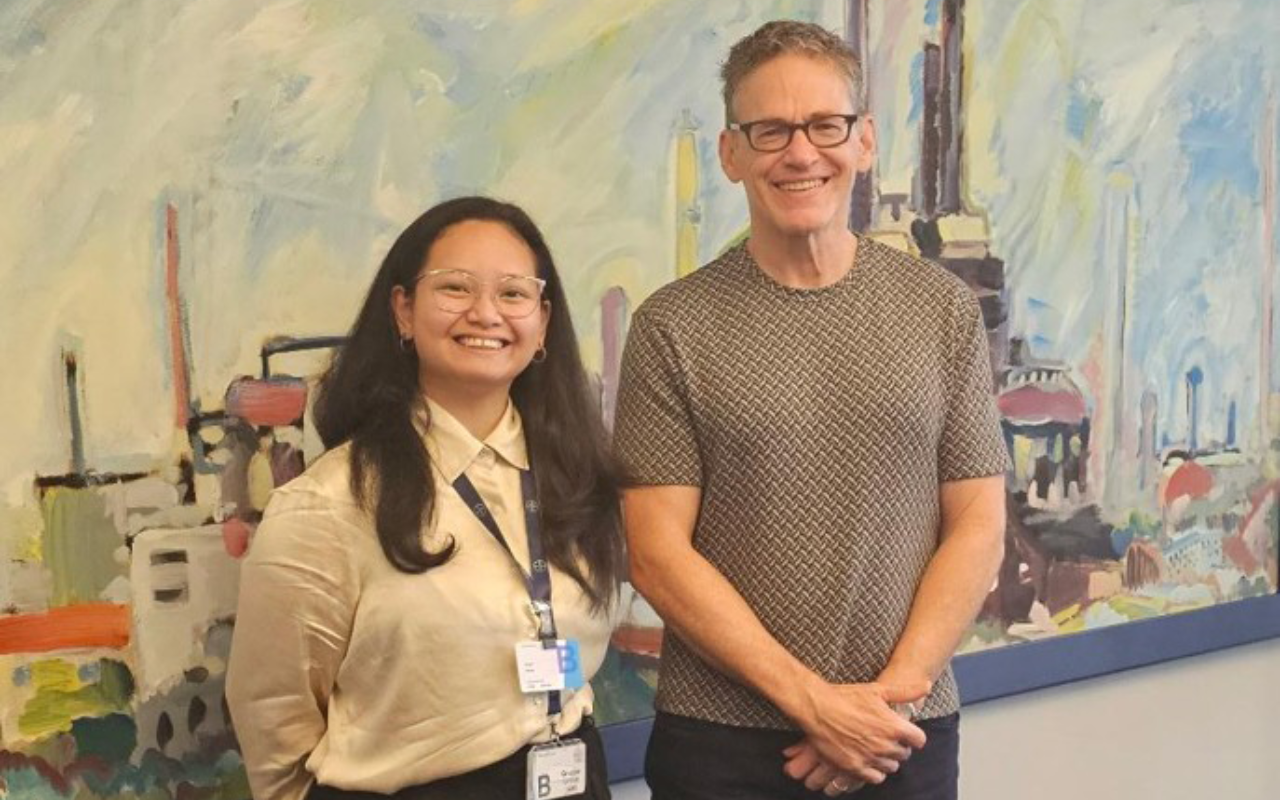
The Jeff Ubben Posse Fellows Program awards five exceptional Posse Scholars $10,000 each and the chance to spend 4-6 weeks during the summer shadowing and learning from a major industry leader. The interview below with Bill Anderson, CEO of Bayer AG, was conducted by Posse Scholar Angel Yanga, a current junior at Bucknell University, who worked with Bill Anderson as a 2026 Jeff Ubben Posse Fellow. The conversation has been edited and condensed.
ANGEL: Do you remember the moment you decided to pursue your first CEO position? What was going through your mind, and what ultimately convinced you to take that step?
Bill Anderson: My interest started early. In high school, I participated in “Junior Achievement,” in which my class built businesses from the ground up. I was one of the leads in sales and eventually became CEO, which was a great experience. I remember thinking, “I could become a CEO here; I think I can do it again for my career.” Even before that, as a child, I got my first taste of entrepreneurship by selling produce from my family’s garden.
Many leaders talk about empowering people. For you, that seems to mean giving more decision-making authority to the people closest to the work. When did you first realize that was an effective way to empower teams?
For me, empowerment starts with ownership. People should take responsibility for problems and actively work to solve them rather than waiting for someone else to do it. Leadership doesn’t mean pretending you have all the answers. I want people closest to the work to use their knowledge and expertise. The leader’s job is to seek the truth and give people the responsibility to act on it.
During my seven weeks in DC, what stood out most to me was how genuinely people across teams seem to know and respect you. What do you think is most important for building that kind of trust?
Trust comes from genuinely caring about people and treating them with kindness and respect. I also think humility is incredibly important. Leadership isn’t about having people think highly of you; it’s about serving others and doing your job responsibly. Ultimately, people can tell whether you genuinely care about them and the mission or whether you’re simply managing how you’re perceived.
People often talk about leadership as influence. But when you walk into a room today, people are influenced simply because you’re the CEO. How do you ensure that people truly agree with your ideas versus just agreeing with your title?
I don’t think the goal should be to get people to agree with me because I’m the CEO. In fact, I think that’s dangerous. My responsibility is to seek the truth and listen to people who have knowledge and expertise and then make the best decision I can.
I’m much more interested in whether we’re doing the right thing than whether people approve of me. Leaders shouldn’t be focused on managing perceptions or seeking approval. They should be focused on truth, knowledge, caring for people, and caring about the mission. If people disagree with me, I want to understand why. And if someone has better knowledge or evidence than I do, I need to be willing to listen.
Some of Bayer’s biggest commitments require significant alignment across leadership and the board. When you’re deeply convinced that a decision is the right one, how do you bring others along and earn their support?
I think the first thing is to establish the truth. You have to be grounded in reality and understand the facts rather than starting with what you want the answer to be. Then you have to communicate that truth clearly and connect the decision back to the mission. At Bayer, our mission is “Health for all, Hunger for none.” Once you’ve established the facts and you’re convinced something is right for the mission, you have to be fully committed to it and bring people along with you.
I’d love to better understand how your decision-making works. When you’re faced with a difficult, high-stakes decision, what does your thought process look like? Is there a question you always come back to that helps you cut through the noise?
When I’m making a difficult decision, I try to come back to evidence, experience, and expertise- the three E’s. Particularly when you’re working on something novel or something that’s going to take a long time, you have to distinguish between what you actually know and what you hope will happen. I want estimates to be based on the evidence that we have, not on optimism.
For major investments, I also look at what we’re investing at each stage and what we’re going to learn from that investment. The question is: does the next milestone give us information that meaningfully reduces the risk? You can use tools like probability-adjusted net present value to help think through the commercial potential, but ultimately there’s still judgment involved. And I always want that judgment grounded in the evidence and aligned with the mission.
Looking back on some of the biggest decisions in your career, how did you know when a risk was worth taking versus walking away from?
I think the key is matching the risk with the potential reward. In medicine development, for example, you often have to make decisions when you don’t yet know whether something will work. That doesn’t mean you simply make one enormous bet. You can invest incrementally and see what you learn at each milestone.
I look at how much we’re required to invest, how clear the results of the milestone will be, and whether those results meaningfully reduce the risk of the next investment. There have been programs where the risk was very high, but we had a strong belief in the potential impact, the early data supported that belief, and we were able to make the investments incrementally. That’s the difference between taking a calculated risk and simply taking a gamble.
I’ve had the opportunity to meet leaders who consistently lead with kindness and humility through the highs, the lows, and the ordinary moments in between. For you, where do you draw your strength from, and what helps you stay grounded when the responsibilities of leadership become especially demanding?
I think faith becomes increasingly important as you get older, particularly as the responsibilities you carry become greater. For me, it provides a foundation for how I make decisions and how I try to lead. I read the Bible almost every day because it gives me wisdom and helps keep me grounded. My faith reminds me to remain humble, to listen, and to recognize that I don’t have all the answers.
Some of the people I admire most are those who put their beliefs into action by serving others and their communities. Reconnecting with a faith community has also been meaningful because it gives me people who can support me, challenge me, and remind me of what matters beyond work. Ultimately, I think strength comes from knowing that your life and your work are about something bigger than yourself.
When you meet exceptionally talented people, what separates those who eventually become great leaders from those who don’t? And for someone early in their career, what habits or qualities are most worth developing?
I think one of the most important things is depth. The world needs people with genuine expertise and genuine care, not people who simply have influence without substance.
Early in your career, I would encourage you to develop deep expertise in something difficult. Learn the fundamentals and become very good at what you do. You can build breadth over time, but you need something substantial underneath it.
Dedication matters enormously. If you genuinely care about your work and you’re willing to persevere, that creates a foundation for leadership.
I’m at a point in my life where I love many different things: science, medicine, engineering, culture, and global affairs. People often tell you to specialize early, but I’ve noticed many exceptional leaders have unusually broad interests. Looking back on your own career, when should someone lean into their curiosity, and when should they narrow their focus?
I think you should distinguish between the things where you really need formal education and the things you can continue learning throughout your life. Some fields require a deep technical foundation, so I think it’s important to build that early in your career. Become really good at something; then, over the course of your life, you can continue pursuing your other interests and developing that breadth.
I wouldn’t tell someone to suppress their curiosity. I’d say: build something deep first. Master the core of what you’re doing and then use that foundation to explore the other things that interest you.