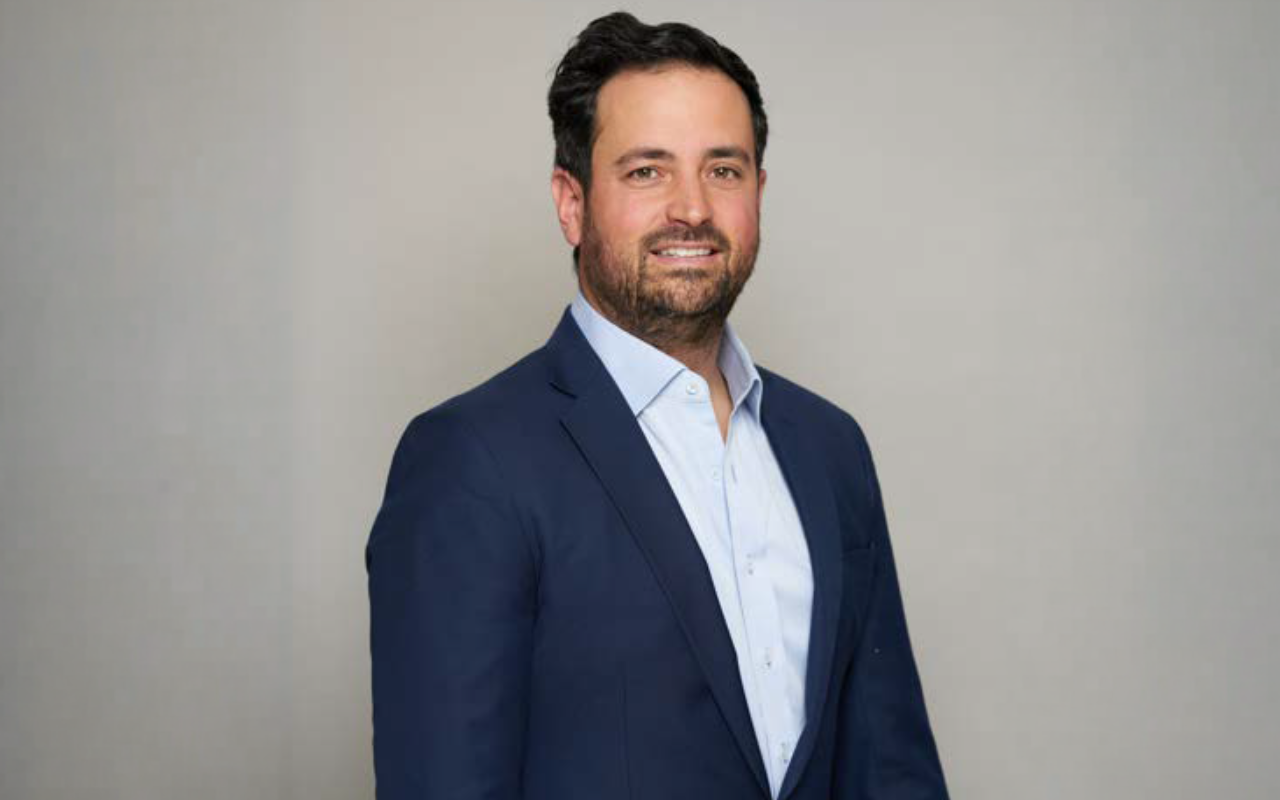
Interview with Posse National Board Member Evan Morgan
Evan Morgan is co-founder of Radcliff, a New York–based investment firm focused on compounding capital by partnering with exceptional owner-operators. Before founding Radcliff in 2016, he was a partner at Revolution, focusing on growth equity and buyout investments. Evan began his career at The Carlyle Group. He holds a B.A. in Politics, Philosophy, and Economics from the University of Pennsylvania.
Where were you born and raised, and what about those years has stayed with you?
My mother will like this question. I grew up in Washington, D.C., with two very loving parents. One was a journalist, and the other ran a public relations firm. Lots of love, lots of family, lots of sports. My younger brother and I went to St. Albans, right across the street from our house. Our family instilled really good values: hard work, respecting other people, lending a helping hand. Things that are basic, but that not everybody learns.
My mom had very high standards. Whenever I shared my schoolwork with her, she would rip it into a thousand pieces and tell me what was good and what was not so good. She pushed us to appreciate that your first thought isn’t necessarily your best thought. Just keep grinding and keep trying to make things better. I give her a lot of credit for that.
Does anything from your studies at Penn inform how you move through the world today?
The thing I learned at Penn that’s super important is the value of a liberal arts education: learning how to write and communicate, how to take a thought, put it on paper, and articulate it. That has turned out to be invaluable in what I do every day. A lot of people think finance is all about numbers and math. But the true art of this business is best shaped by a liberal arts background. I didn’t go to Wharton; I went to the College. A lot of business-school guys are really good at math, but they’re not as good at convincing people to do things, articulating views, or making sense of the numbers.
What do you think about AI as it relates to those skills?
It’s going to change things a lot. But my instinct is that we’re going to swing back super hard to putting a huge premium on people with those skills. When somebody turns something in to me that’s just AI slop, I’m uninterested. We write quarterly letters to our investors, and early on we let Claude write one. It was drivel. So we started over and wrote it ourselves. These tools are transformative and will be additive in a million ways, but I think the workplace is going to put a real premium on human thought.
When you reflect on your career, what stands out?
I was always lucky to work for really high-quality people and have direct access to them. At Carlyle, I worked almost directly for the co-founder, David Rubenstein. Then I went to work for Steve Case, the founder of AOL, and Ted Leonsis, who owns all the D.C. sports teams. So I wasn’t sitting in the mailroom. I was on the front lines with extremely entrepreneurial people, and that shaped everything. David once said, “There aren’t a lot of entrepreneurs who work for me, because if they were entrepreneurs, they wouldn’t be working for me.” I got to do the entry-level job but also kind of pretend I was near the top, which is how you learn.
Thinking about your giving philosophy, how do you choose which organizations and initiatives to support?
The truth is, I tend to support the people who support me. Posse is a good example. Henry Ellenbogen, Brad Singer, Howard Krass—these board members have been friends, mentors, and business partners. I gravitate toward the things really smart, capable people gravitate toward. And then the mission has to be something I care about, and it’s hard not to care about Posse’s mission. Posse also gives me the opportunity to spend more time with people I really love, and that’s a big deal.
What about Posse’s mission speaks to you?
My wife finds it almost comical that after 25 years, I’m still basically surrounded by my “posse” from Penn. They’re my closest friends. We do business together. Our kids are friends. My business partner is my college roommate. I think everybody deserves a shot at developing those kinds of relationships, and that’s what Posse is all about. I wasn’t a Posse Scholar, but I developed my own posse in college, and it’s been my posse ever since.
What might people be surprised to learn about you?
That I actually do relax and take vacations. A lot of people know me as the perpetual-motion Energizer Bunny. But there’s another side of me that loves to travel, fall off the grid, and disappear.
As someone at the top of his field, who do you look up to?
In my line of work, you find a lot of people who chase every extra dollar and burn themselves into the ground. They don’t have great relationships with their wives, kids, or friends. I admire people whose life and work meld, so it doesn’t totally feel like work. I look up to people who can run really serious organizations but also have a good time doing it.
If you could press a button and change one thing about the world, what would it be?
The instability. There’s too much political motion, geopolitical motion, technological motion. If we could calm it down a little, I’d hit that button. That’s a good button.